Kia Aircon Not Working? Causes, Diagnosis and What to Replace
A Kia aircon that has stopped cooling fails in one of three places: the airflow moving through the car, the refrigerant in the sealed circuit, or the compressor that pumps it. Those sit at wildly different price points, so work cheapest-first.
Know the fact that saves the most money before you book anything: refrigerant is not a consumable. If your Kia needs gas every December, you are not maintaining the system — you are paying to refill a leak.
Key Takeaways
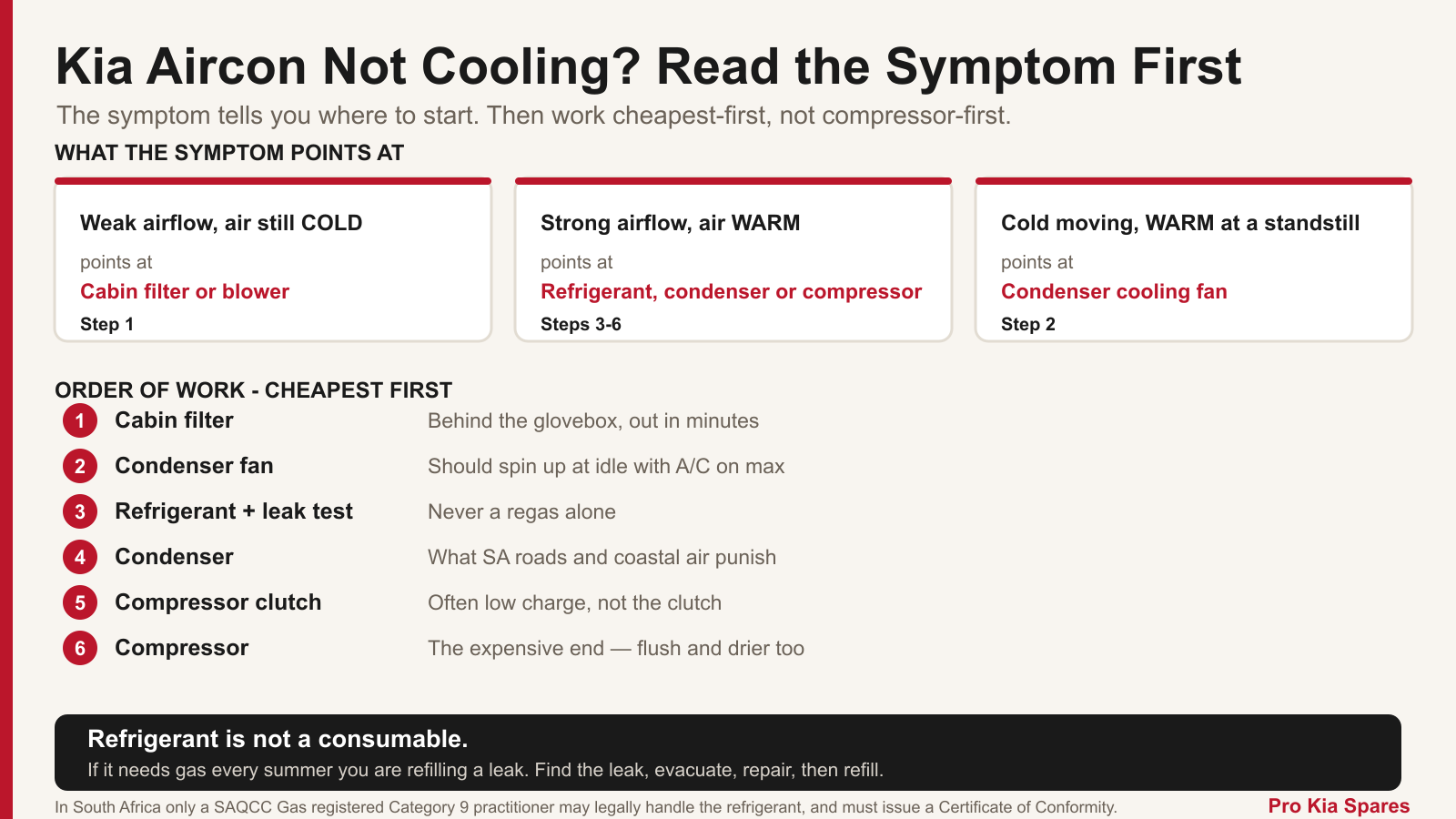
- Diagnose cheapest-first: cabin filter, condenser fan, refrigerant charge, condenser, compressor clutch, compressor.
- Regassing a system with a leak is money thrown away. Find the leak, evacuate, repair, then refill to the factory charge.
- Weak airflow with cold air = filter or blower. Strong airflow with warm air = refrigerant, condenser or compressor.
- Cold on the move but warm at the robots points at the condenser cooling fan, not the gas.
- MAHLE calls condenser leaks "one of the most common reasons for the air conditioning system's failure" — and the condenser sits right at the nose of the car.
- R134a and R1234yf are not interchangeable. Your car's type is on a label under the bonnet; only a SAQCC Gas registered Category 9 practitioner may legally handle it here.
Step 1: The cabin filter — the cheapest thing it could be
If the air from the vents is still cold but there is barely any of it, stop thinking about gas. You almost certainly have a blocked climate control air filter. On most Kias it sits behind the glovebox and, per Kia's owner's manual, comes out in minutes with no tools.
MAHLE, which manufactures these filters, warns that a clogged one causes "reduced performance or even total failure" of the heating and cooling system, and that "a blocked filter can also lead to foggy windows, reducing visibility and safety". Their interval is once a year, or at the latest every 15 000 km. Kia adds that a vehicle "operated in severely air-polluted cities or on dusty rough roads for a long period" needs it replaced earlier — which covers most gravel-road and Highveld-dust driving.
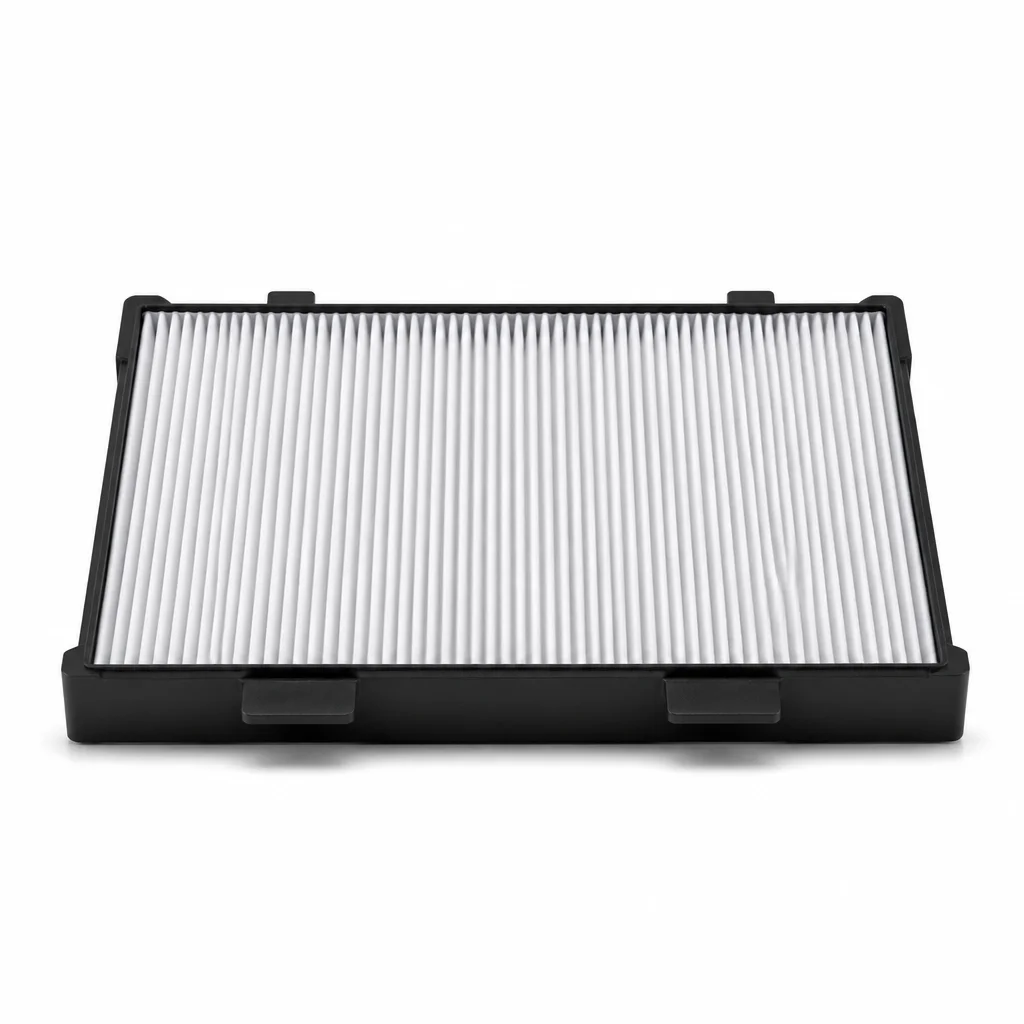
Kia Cabin Air Filters — All Models
The first thing to change when airflow drops but the air is still cold. We stock climate control filter elements for the full Kia range, and they fit behind the glovebox in minutes.
Step 2: Cold on the move, warm at a standstill
This is the most useful symptom in the whole diagnosis, because it points almost directly at the condenser cooling fan rather than the refrigerant. As one workshop explains it: "When you're driving, natural air movement through the grille provides that cooling. When you stop, that natural airflow disappears, and electric cooling fans take over." If those fans are "slow or running intermittently — or not working at all — the refrigerant gets too hot".
Check it in your driveway: park, run the engine, switch the aircon to maximum, then look and listen at the front of the car. The fan should spin up within a minute or two and is clearly audible at idle. If nothing turns, you are looking at a fan motor, relay or fuse — not a gas problem, and cooling system parts are far cheaper than anything downstream.
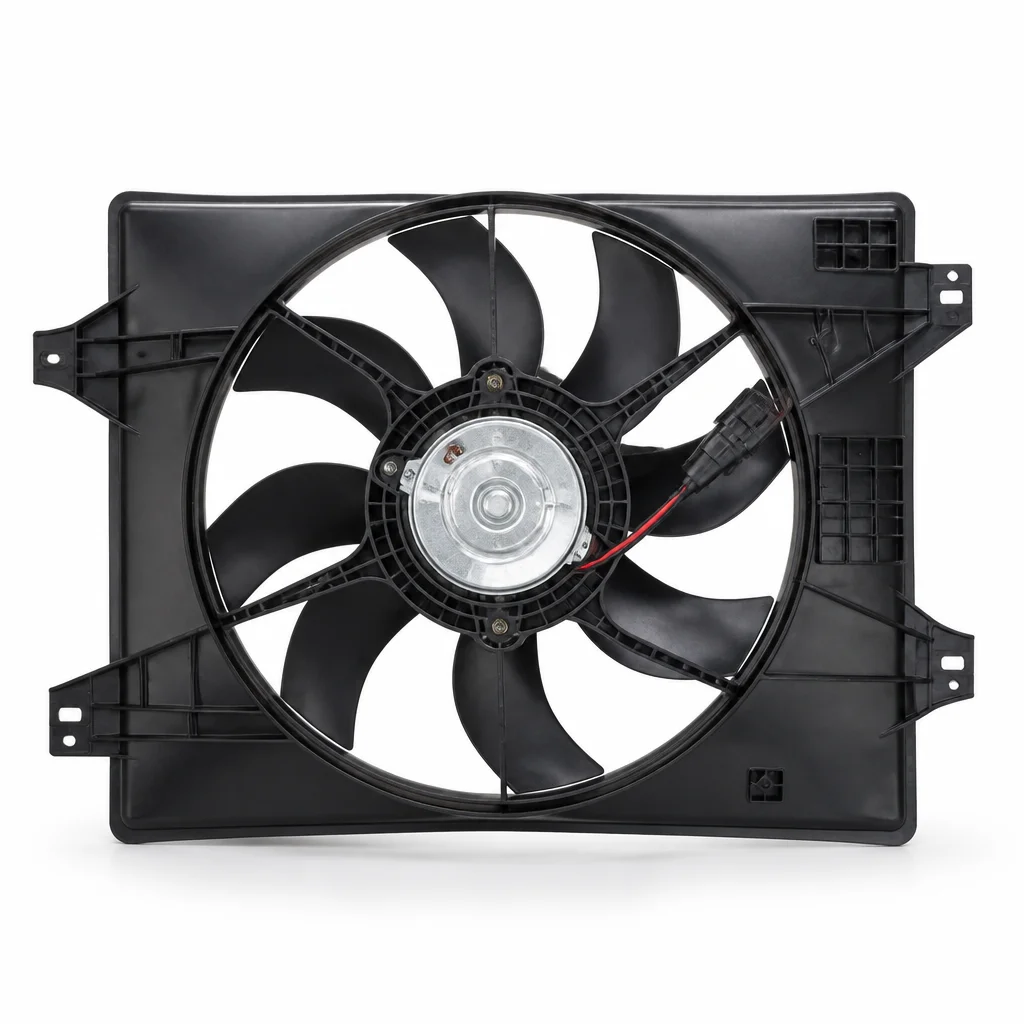
Kia Condenser & Radiator Cooling Fans
If the aircon only goes warm when you stop, the fan is the prime suspect. We supply fan assemblies, motors and shrouds for the Picanto, Rio, Cerato, Sportage, Sorento and the rest of the range.
Step 3: Low refrigerant — and why a regas alone is a waste
If airflow is strong and the fan runs but the air is merely cool, the charge is next — and this is where the DIY route ends. MAHLE's service guidance is to check "whether there is enough refrigerant in the cooling circuit, as well as for leaks, dirt, or damage, and to perform a pressure test on the high and low-pressure sides", both sides read together on a gauge set.
Here is the part most shops will not lead with. As The Globe and Mail's automotive desk puts it, "Refrigerant is not consumed or used up in normal day-to-day operations, but some cars do exhibit a slight loss over time." A properly repaired sealed circuit holds its charge for years, so if yours is empty a season after a regas, the gas did not evaporate — it escaped. The correct order of work is unambiguous: "Find the leak, temporarily evacuate the system of any remaining refrigerant, repair and refill to the factory-specified amount."
So if a shop offers to top it up without leak-testing, decline. You will be back, and meanwhile you are risking the most expensive component in the car's aircon. The compressor's lubricating oil travels round the circuit with the gas, so a system that has lost its charge has also lost the oil keeping the compressor alive. The usual leak points are the condenser, the O-rings and hose joints, the Schrader service valves, the compressor shaft seal, and the evaporator behind the dashboard — the last is the one to dread, because reaching it means the dashboard comes out.
Step 4: The condenser — the part SA roads punish
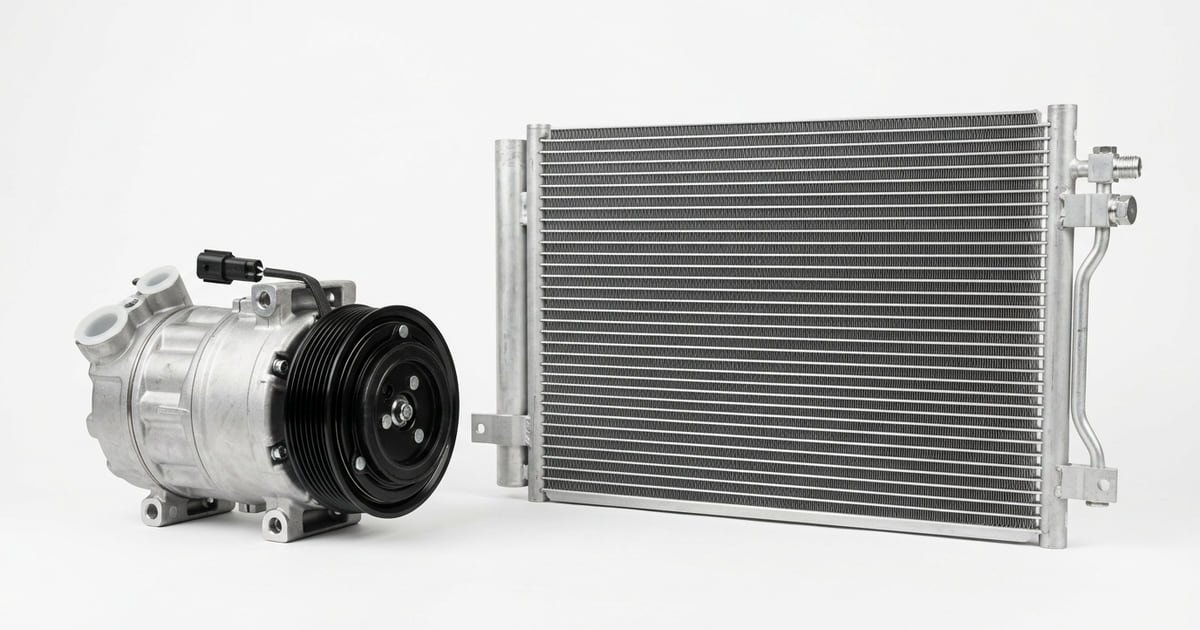
The condenser is a thin aluminium heat exchanger at the nose of the car, in front of the radiator, with nothing protecting it but the grille. MAHLE puts it exactly: "Due to its position at the front of the vehicle, the climate condenser is constantly exposed to wind, weather, and stone chips." On our roads that exposure is worse than the European design case — chip-and-spray surfaces, gravel shoulders and long stretches behind trucks throw stones straight into the condenser face, while coastal cars corrode from the outside in. MAHLE notes that "corroded or missing fins reduce the condenser's cooling performance" even before a hole opens up.
Look for an oily, dirt-caught patch on the condenser face, flattened or missing fins, or a system that goes flat within weeks of a regas. A holed aluminium condenser is a replacement, not a repair. Change the receiver-drier at the same time and evacuate properly before refilling, because Sanden warns that "water ingress to such oils creates acid which corrodes the internal components of the compressor, leading to system malfunction and potential compressor seizure".
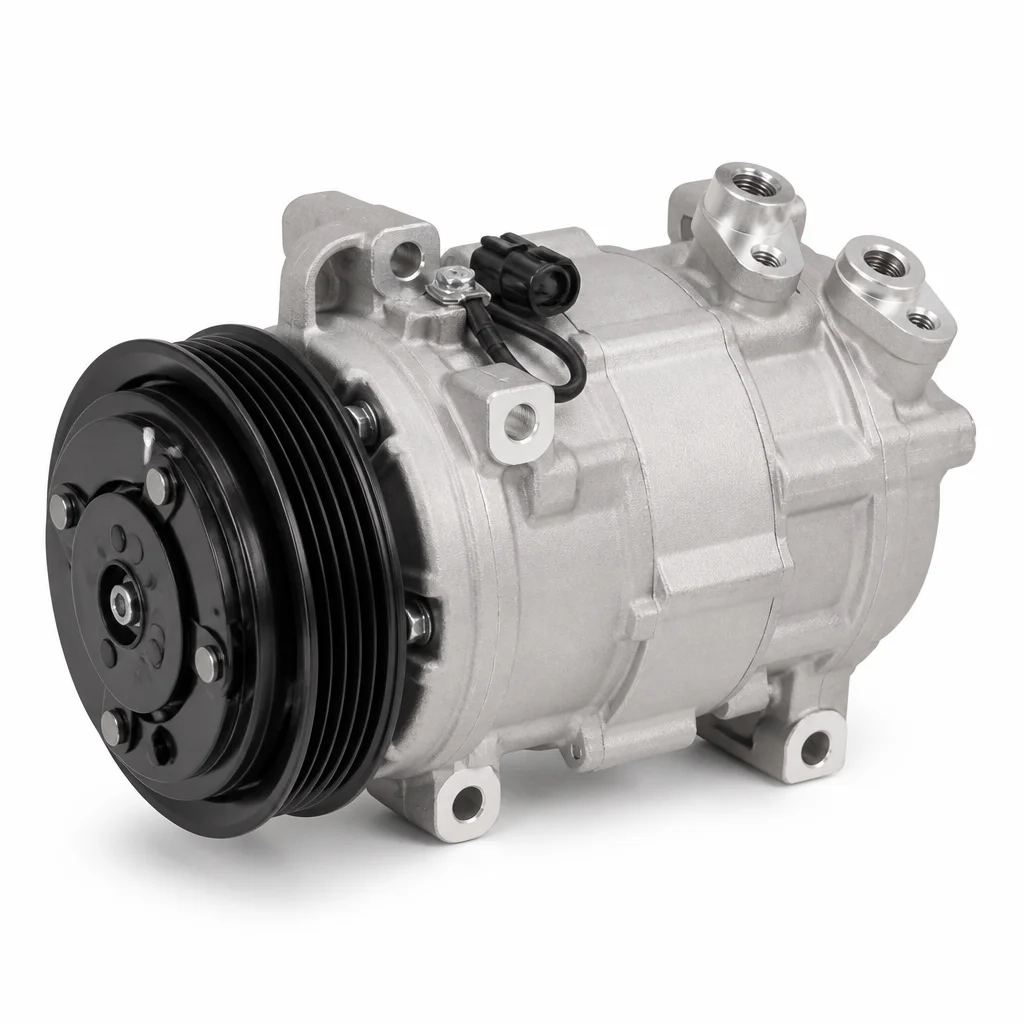
Kia Aircon Compressors, Condensers & Pipes
Stone-holed condensers and seized compressors are two of the most common Kia aircon jobs we quote. New and tested used units for the Picanto, Rio, Cerato, Sportage, Seltos, Sorento and Carnival, delivered nationwide.
Step 5: The compressor clutch won't engage
Switch the aircon on with the bonnet up and watch the front of the compressor pulley. The centre plate should snap in with an audible click and turn with the pulley. If the pulley spins but the plate never engages, the compressor is never being asked to pump — though that is not automatically a dead compressor. Check the clutch fuse, relay, wiring and earth, the clutch coil, and the clutch air gap, which when worn too wide leaves the electromagnet unable to pull the plate in.
The most common cause, though, is low refrigerant, and that is deliberate: "When the system is low on charge, the low-pressure switch prevents the clutch from engaging to protect the compressor from self-destructing" — because "refrigerant carries lubricating oil throughout the system". Never jumper that switch to force the clutch in.
Step 6: When the compressor really has failed
A failed compressor announces itself: a rattle, grind or squeal that arrives the moment the aircon is switched on and vanishes when it is switched off. A seizure also contaminates everything downstream, because metal debris is carried through the circuit — so a proper repair replaces the compressor, the receiver-drier and usually the expansion valve or orifice tube together, and flushes the lines. Fit a compressor to a system full of the last one's swarf and you buy the same failure again. Browse what we hold in aircon compressors.
Aircon is not a summer-only problem here
The aircon dries the air, it does not only cool it. Kia's auto defogging system, its manual explains, answers high cabin humidity by turning the A/C button ON, changing the mode "to defrost to direct airflow to the windscreen" and increasing fan speed. A car with a dead compressor cannot dehumidify — which is why a Durban winter morning fogs the windscreen and takes an age to clear. That is a visibility problem, not a comfort one. Seals dry out unused, too: a shaft seal "is kept lubricated the entire time the compressor is engaged and running".
R134a or R1234yf? Read the label
Two refrigerants are in circulation and they are not interchangeable. R1234yf is classified A2L — mildly flammable — where R134a is not, and the systems differ physically: "The R1234yf system refrigerant circuit is accessed using service couplers that are a different size." The European Union drove the changeover under its MAC Directive 2006/40/EC, which bars refrigerants with a global warming potential above 150 — first from newly type-approved vehicles, and then, from 1 January 2017, from all new vehicles registered or sold. That is a European timeline, not a South African one, and we have not been able to verify which model years of SA-market Kias carry which refrigerant. Do not infer it from the licence disc — Kia prints it on the car. The owner's manual places the refrigerant label under the bonnet, carrying the refrigerant and lubricant classifications, the charge amount, and the note that it "requires a registered technician to service the A/C system".
That last line is a legal requirement here, not marketing. Gas work falls under Regulation 17 of the Pressure Equipment Regulations — "No person shall... Install or remove a gas appliance... unless such person is an authorised person" — with SAQCC Gas registering practitioners against SANS 10147. Category 9, "Car Air Conditioning Practitioner", is the relevant one, and the holder must issue a Certificate of Conformity after the repair. Ask to see the card.
What we've seen in the yard
Through March and April 2026 the aircon enquiries reaching our Briardene yard were overwhelmingly condensers and compressors, and the story repeated: a Sportage or Sorento past 140 000 km, regassed once the previous summer, cooling fine for a few months, then flat again. When the condenser comes off the damage is visible from a metre away — flattened fins where a stone hit, or corrosion on a car that has lived near the coast. The ones that hurt are the cars where a compressor was fitted to a circuit nobody leak-tested or flushed; we have quoted more than one Durban owner for a second compressor inside a year on that basis.
Fix the leak first, then buy the part — and when you do, send your VIN with the model and year. Sportage spares, filters and maintenance parts and everything in between ship nationwide from Durban North. If the aircon is not your car's only niggle, our write-up on common Rio faults covers what else lands in the yard.
Sources
- The Globe and Mail — What causes AC refrigerant loss in a car? (https://www.theglobeandmail.com/drive/culture/article-what-causes-ac-refrigerant-loss-in-a-car/)
- MAHLE Aftermarket (Workshop Heroes) — The air conditioning condenser (https://workshop-heroes.mahle.com/en/article/air-conditioning-condenser)
- MAHLE Aftermarket (Workshop Heroes) — Cabin air filter: high performance in the smallest space (https://workshop-heroes.mahle.com/en/article/cabin-filter-strong-performance)
- Kia Owner's Manual — Inspecting and replacing climate control air filter (https://ownersmanual.kia.com/docview/webhelp/Kia/cb404555-2534-4f25-8006-b650cf1138a8/topics/t00548.html)
- Kia Owner's Manual — Air conditioning (A/C) refrigerant label (https://ownersmanual.kia.com/full_webhelp/LQ2AH/2027/en_US/topics/t00348.html)
- Kia Owner's Manual — Auto defogging system (https://www.kia.com/content/dam/kia2/in/en/content/carnival-manual/topics/chapter4_32_5.html)
- SAQCC Gas — Registration category SARACCA, Category 9 Car Air Conditioning Practitioner (https://saqccgas.co.za/gas-practioners/registration-categories-per-assoc/saracca-assoc/registration-category-saracca-2/)
- RACA Journal — Competency levels and registration of personnel (SANS 10147) (https://refrigerationandaircon.co.za/competency-levels-and-registration-of-personnel/)
- RACA Journal — Why is it necessary to be registered as an authorised refrigeration practitioner? (https://refrigerationandaircon.co.za/why-is-it-necessary-to-be-registered-as-an-authorised-refrigeration-practitioner/)
- Australian Refrigeration Council — R1234yf refrigerant (https://arctick.org/information/autogas/r1234yf-refrigerant/)
- Directive 2006/40/EC, Article 5 — refrigerant phase-out in motor vehicle air conditioning (https://www.legislation.gov.uk/eudr/2006/40/article/5)
- Rick's Free Auto Repair Advice — AC compressor clutch not engaging (https://ricksfreeautorepairadvice.com/ac-compressor-clutch-not-engaging/)
- Classic Auto Air — Why your A/C compressor is leaking oil or refrigerant (https://www.classicautoair.com/why-ac-compressor-is-leaking-oil-or-refrigerant/)
- Sanden Aftermarket — Sanden FAQ, refrigerant oil and moisture ingress (https://sandenaftermarket.com/about-sanden/sanden-faq/)
- Gulf Auto Clinic — AC cold while driving but warm at idle (https://gulfautoclinic.com/ac-cold-driving-warm-idle/)
- Gemba Automotive — Car A/C cold while driving, warm at idle (https://www.gembaautomotive.com/blog/car-ac-cold-driving-warm-idle-arizona/)