Kia Clutch Problems: Symptoms, Causes and How Long a Clutch Should Last
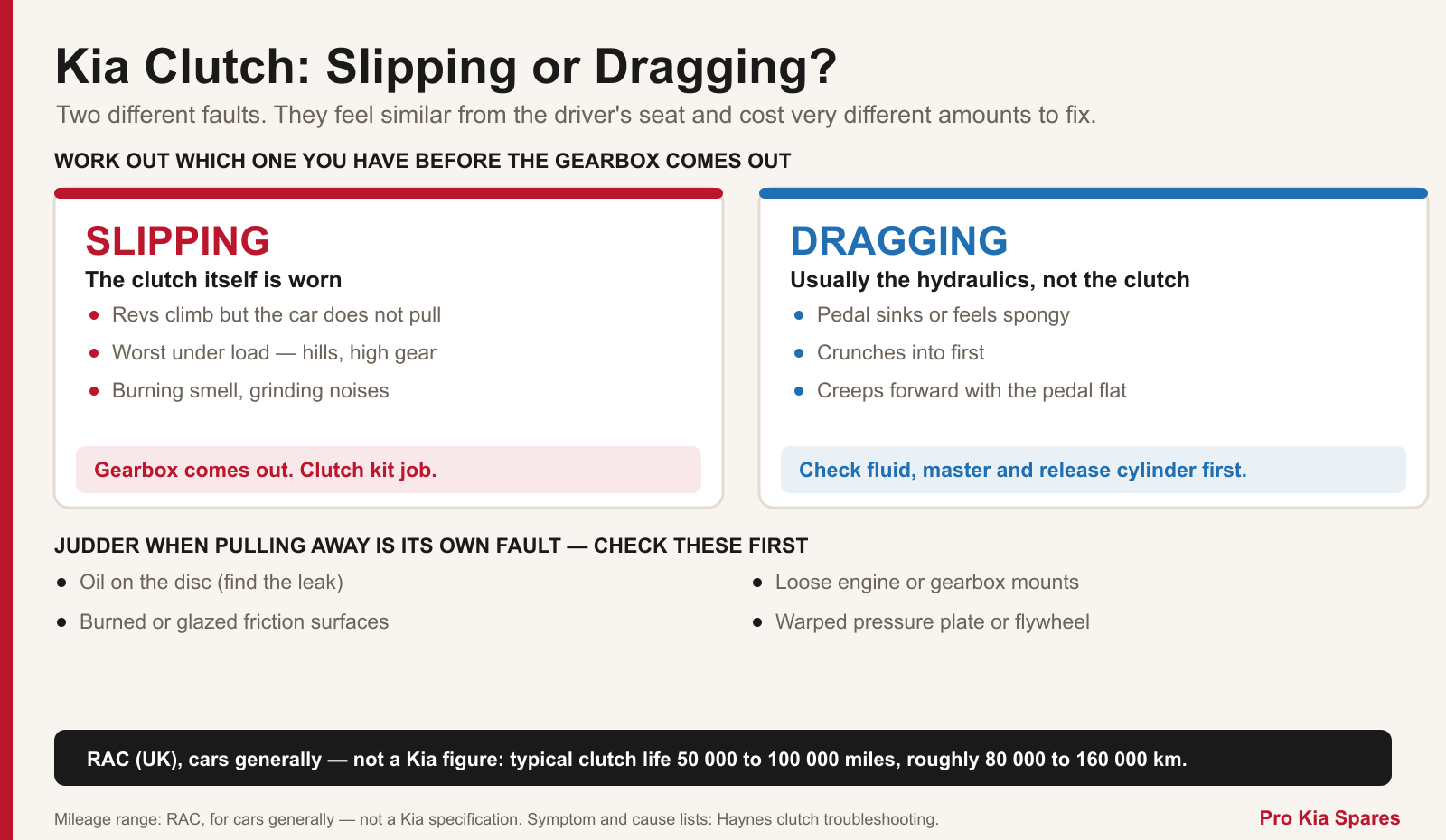
If your Kia's engine revs climb but the car does not pull, the friction clutch is slipping — either genuinely worn, or soaked by an oil leak that has to be fixed at the same time. If the pedal instead sinks, feels spongy, or the car crunches into first with the pedal flat, that is usually a hydraulic fault — the clutch master cylinder, the release cylinder, or the fluid — and the clutch itself may be fine. The two feel similar from the driver's seat and cost very different amounts to fix. Telling them apart before the gearbox comes out is the most useful thing you can do.
Key Takeaways
- Slipping usually means worn — but rule out an oil leak first. Revs rising without acceleration, plus a burning smell, points at the friction disc and pressure plate. A leaking rear main or input-shaft seal soaks the disc and makes a healthy clutch slip, and a new one will slip too if the leak stays.
- Dragging usually means hydraulics. Haynes lists a failed master or release cylinder, a leaking line and low fluid among the causes of a clutch that will not disengage.
- There is no single mileage figure. The RAC puts typical clutch life at 50 000 to 100 000 miles (roughly 80 000 to 160 000 km), with driving style deciding where you land.
- Judder is usually contamination or mounts — oil on the disc, glazed surfaces, loose mounts — not simple wear.
- Do not assume your Kia has a dual mass flywheel. It depends on engine and variant, not the badge; catalogues list both types for the same diesel.
- A K2700 is not a Picanto — a loaded bakkie works its clutch far harder than a hatchback.
- A dual-clutch gearbox is a different animal. Its clutch packs are not a conventional clutch kit, and none of the pedal-feel diagnosis below applies to one.
Slipping or dragging? Get this right first
Signs the clutch itself is worn
A worn clutch slips. Engine speed rises but the car does not accelerate with it, worst under load — pulling away on a hill, or in a high gear at low speed. The RAC lists unusually high revs, a burning smell and grinding noises among the warning signs, blaming wear built up over thousands of miles, riding the clutch, and stop-start driving.
Haynes gives the mechanical causes: normal friction plate wear, glazed surfaces, a worn flywheel face, weak pressure plate springs, and — importantly — a leaking engine rear main seal or gearbox input shaft seal. That last pair matters: if oil has soaked the disc, a new clutch will slip again unless the leak is fixed too.
Signs it is the hydraulics, not the clutch
A dragging clutch is the opposite fault: it will not fully release, so the car fights you going into gear, crunches into first, or creeps forward at a standstill with the pedal down. Haynes lists the sudden-onset causes as a failed hydraulic master or release cylinder, a leaking hydraulic line, a broken or loose cable or linkage, and a contaminated disc. For the gradual version it lists a stretched cable or bent linkage, a failing master or release cylinder, low fluid, and a broken engine or gearbox mount.
That is the pattern worth memorising. A pedal that goes soft or sinks is usually a hydraulic story. The Kia Rio workshop procedure confirms the system runs on brake fluid and must be bled at the release cylinder, which is why a slow leak quietly starves it and mimics a dying clutch. The RAC gives the same first check: the master cylinder fluid level, topped up if necessary.
None of that requires the gearbox to come out. A clutch replacement does. That is why the distinction matters.
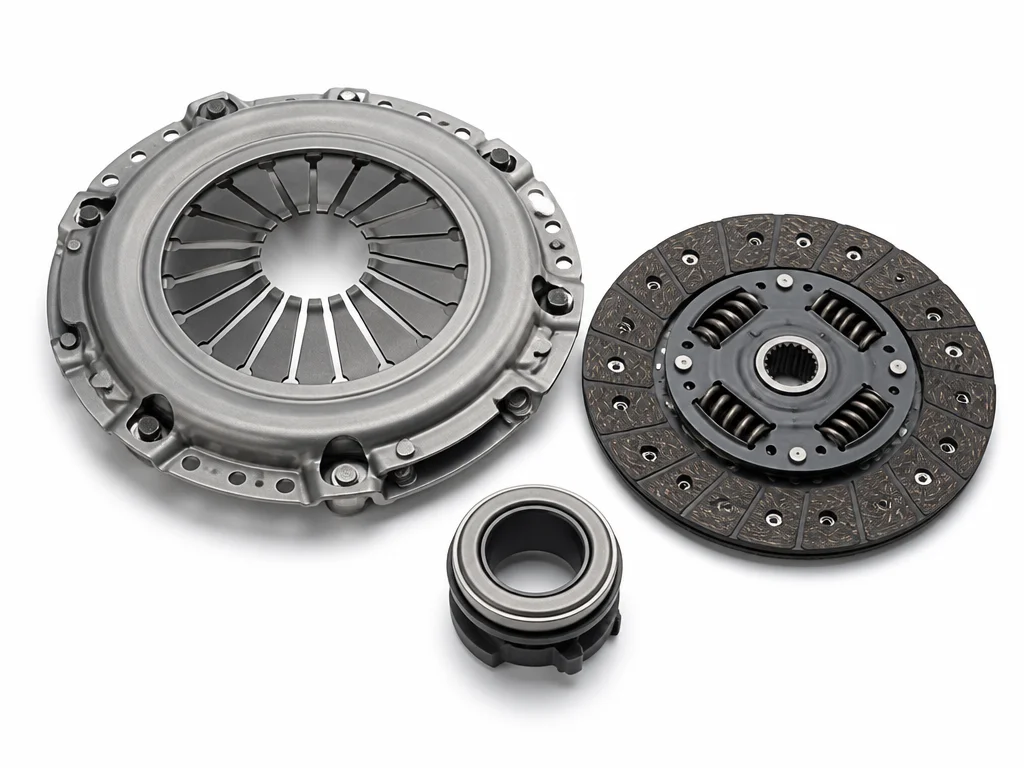
Kia Clutch Kits — New & Used
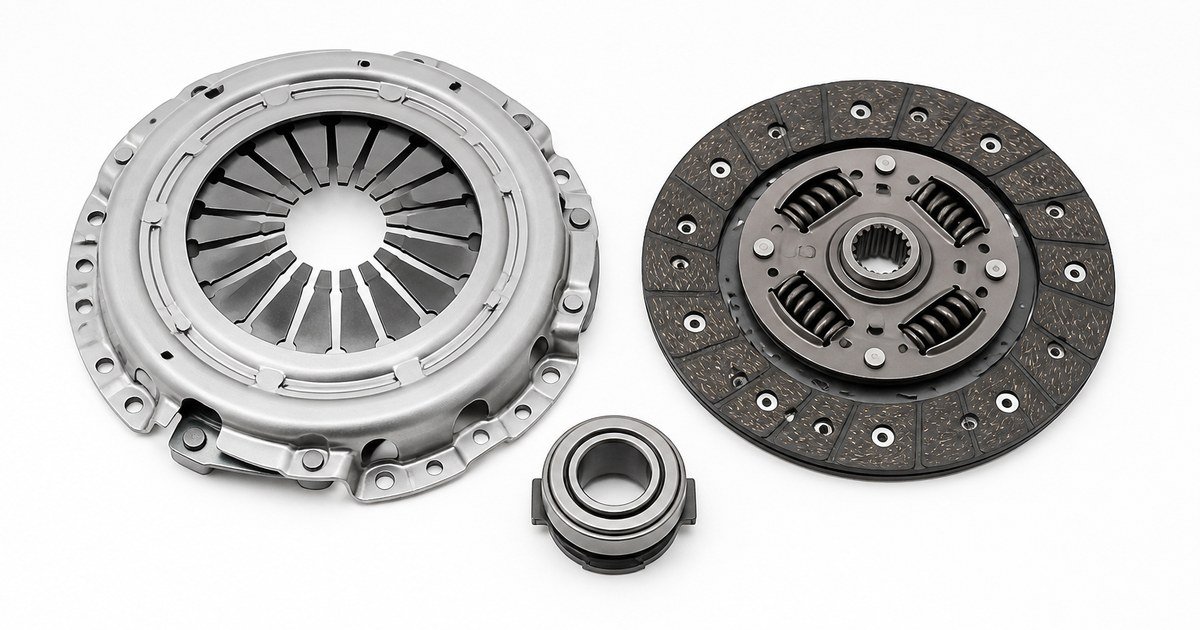
If the diagnosis is a genuinely worn clutch, the pressure plate, friction disc and release bearing all come out together while the gearbox is off the car. Tell us your model and year and we will quote the matching kit.
So how long should a Kia clutch last?
One thing to rule out first: everything here is about a conventional manual clutch. Several Kias on South African roads use a dual-clutch gearbox instead. On those, the clutch packs are an internal gearbox item rather than a clutch kit. Seven-speed units are fitted to the Sportage 1.6 T-GDi — both the 2016-2021 GT-Line AWD and the 2022-on range — as well as the Seltos 1.5 T-GDi, the Sonet 1.0T and the flagship Soul 1.6 CRDi Smart from 2016. The current Sorento 2.2 CRDi uses an eight-speed one. Check the derivative rather than the badge — on these cars the work is costed as a gearbox rebuild, not a clutch job.
For a manual clutch, Kia publishes no life figure, because it is a wear item and the driver sets the wear rate. The best general guide comes from the RAC, which says clutch life varies but typically runs 50 000 to 100 000 miles — about 80 000 to 160 000 km once converted. Treat that as a typical spread for cars in general, not a Kia specification.
Where you land is down to duty. The RAC puts the careful driver at the long end and the stop-start city driver at the short end. A Rio doing the school run plus an hour of Durban peak traffic works its clutch far harder per kilometre than the same car on the open road, which is why the clutch is the most common drivetrain job we quote on a Rio. The same goes for anything that pulls away loaded. A clutch with 60 000 km of heavy traffic can be more worn than one with 150 000 km of highway, which is why a single answer here is close to useless.
Clutch judder when pulling away
Judder — that shudder as you take up drive — is its own fault, not simply "the clutch is old". Haynes lists the causes as burned or glazed friction surfaces, oil on the disc, loose engine or gearbox mounts, worn splines on the clutch disc hub, a warped pressure plate or flywheel, and a worn pilot bearing.
Two are cheap and easy to miss. Loose engine and gearbox mounts produce a judder that feels exactly like a failing clutch, and are visible from underneath. Oil on the disc means a leak to fix. Check both before agreeing to a clutch job.
Does your Kia have a dual mass flywheel?
A dual mass flywheel, or DMF, sits between the engine and the drivetrain to protect the gearbox from harsh vibrations, using two masses connected by springs and dampers. The RAC notes they are commonly found in diesel and high-performance petrol cars, and says a DMF should last over 100 000 miles — around 160 000 km — in most vehicles.
Here is where bad advice starts: you cannot tell from the badge. Flywheel type is set by engine and variant. In the parts catalogues for the Sportage 2.0 CRDi diesel, dual mass units are listed from LuK, Sachs and Exedy — but a single mass unit is listed for the same car too. The RAC says some vehicles can be converted to a single mass kit, which is one reason a catalogue can show both. A listing alone does not tell you what is bolted to your crankshaft, so get the part number off the car or have the workshop confirm it.
If you do have one, the RAC's classic symptoms are a loud rattle or squeak, engine shake, difficult gear changes, a spongy pedal and slipping. Note the overlap: a spongy pedal sits on that list and on the hydraulic one, so on a car with a dual mass flywheel the pedal narrows the field rather than settling it. And treat a rattle with particular suspicion. LuK's technical bulletin is blunt: "A large quantity of Dual Mass Flywheels returned under warranty for 'Noise' are subsequently found to be serviceable. This is often due to a secondary fault with the vehicle giving similar symptoms to that of a failed DMF…" The impostors it lists include auxiliary drive vibration, worn crankshaft dampers, excessive crankshaft end float, gearbox bearing wear and worn mounts. LuK also names what shortens a DMF's life: towing or overloading, using too low a gear, extended idling with the aircon running, and engine faults.
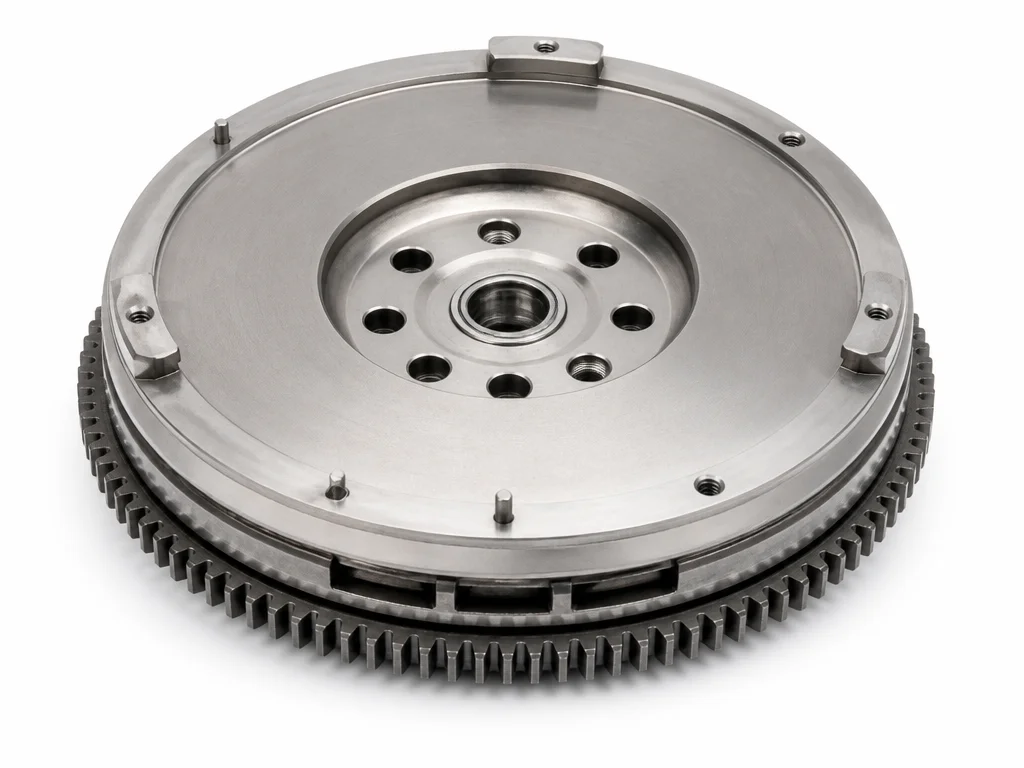
Kia Flywheels and Dual Mass Flywheels
Since the gearbox is already out during a clutch job, the flywheel is the sensible time to sort. Send us your VIN or the number off the old unit and we will match the right type rather than guess.
The K2700 plays by different rules
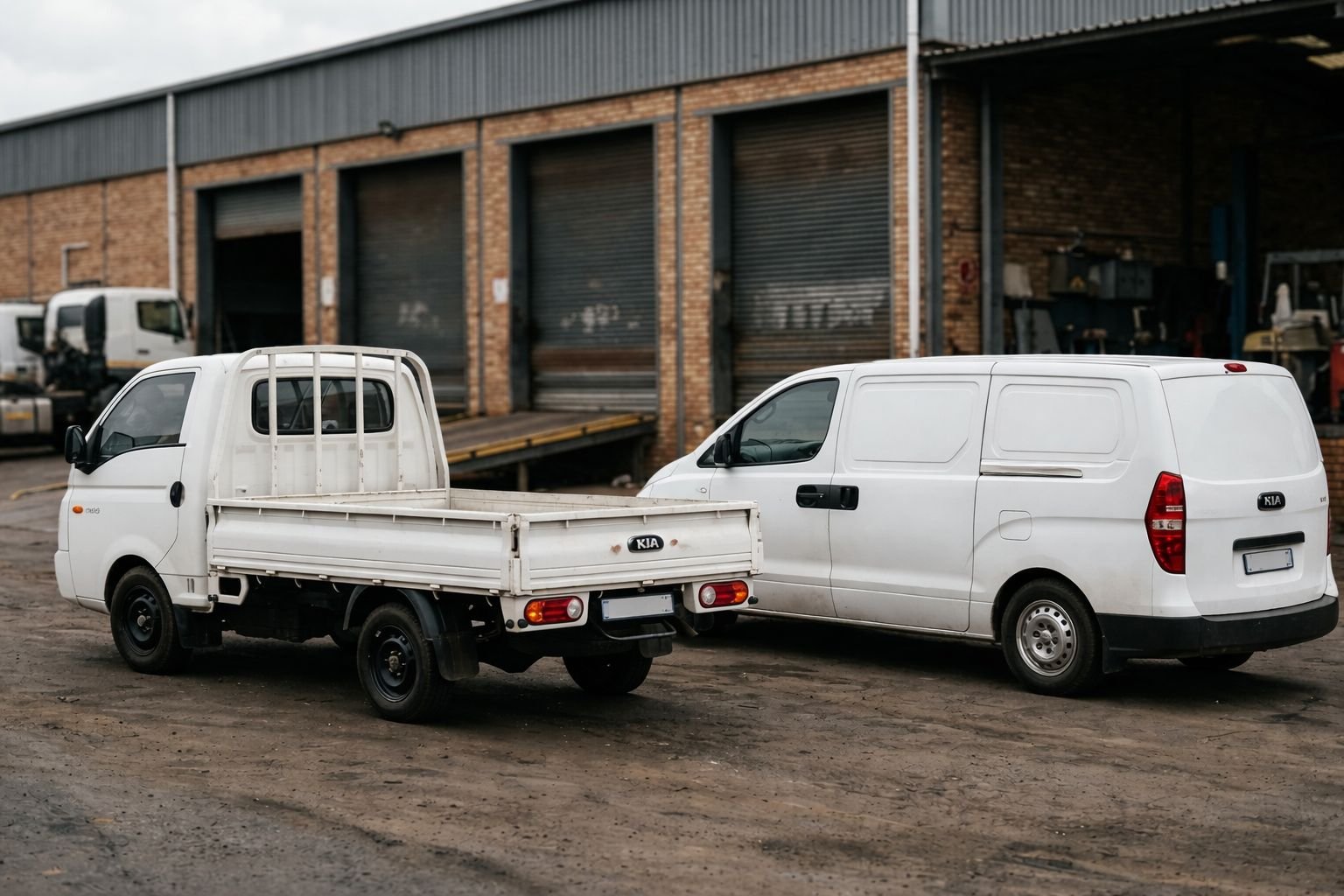
Lumping the K2700 in with the passenger cars is the fastest way to give a bakkie owner the wrong answer. Kia South Africa lists it with a 2.7 litre four-cylinder J2 diesel making 62 kW at 4150 rpm and 165 Nm at 2400 rpm. That is a working vehicle, and it spends its life doing the one thing that punishes a clutch most: pulling away repeatedly under load. Every pull-away puts heat into the friction disc, so a clutch life figure drawn from hatchbacks in traffic does not transfer. Nor does the flywheel discussion; check the part on the vehicle.
The hydraulics we can confirm. Clutch master cylinders are catalogued for the K2700 2.7 D with the J2 engine, so the pedal works hydraulically rather than by cable — and that cylinder is a wear item in its own right. On a hard-working bakkie, a pedal gone soft or long is worth testing before anyone books a clutch.
K2700 Clutch and Hydraulic Parts
Working bakkies go through clutches and clutch master cylinders faster than passenger cars. We can quote the clutch master cylinder and the rest of the hydraulics — tell us the symptom and we will point you at the right part.
What we've seen in the yard
The pattern that comes through our Briardene counter most often is the misdiagnosed pedal. Plenty of Durban and Pinetown enquiries open with "I need a clutch". We ask one follow-up — do the revs climb without the car pulling, or has the pedal gone soft and it crunches into first? Often enough it is the second, which is a hydraulic complaint and does not need the gearbox on the floor. We would rather ask than sell someone a clutch that was not worn.
Before you order parts
Three checks that cost almost nothing:
- Check the clutch fluid and look for a leak — at the master cylinder, down the pedal box, and around the release cylinder.
- Check the engine and gearbox mounts if the complaint is judder. Cheap, visible, and they fake clutch faults convincingly.
- Confirm your flywheel type from the car, not from a forum post about another market.
Once you know which part you need, we can quote it from our Kia parts catalogue — clutch kits, flywheels, hydraulics, and tested used gearboxes if the fault runs deeper. Our Kia gearbox problems guide covers the rest of the drivetrain, and the parts price guide covers what things run to. We are an independent Kia parts supplier, not a dealership; the Kia trademark belongs to Kia Corporation, Seoul.
Sources
- Haynes Manuals — clutch troubleshooting: symptom and probable-cause tables for slipping, dragging, judder and pedal faults (https://us.haynes.com/blogs/tips-tutorials/troubleshooting-common-clutch-issues-and-causes)
- RAC — clutch repairs: typical clutch life of 50 000 to 100 000 miles and the effect of driving style (https://www.rac.co.uk/car-care/car-repairs/clutch-repairs)
- RAC — what is a dual mass flywheel: purpose, vehicles typically fitted, failure symptoms and expected life (https://www.rac.co.uk/drive/advice/know-how/what-is-a-dual-mass-flywheel/)
- RAC — is your clutch slipping: warning signs, causes and the advice to check master cylinder fluid level (https://www.rac.co.uk/drive/advice/car-maintenance/is-your-clutch-slipping-learn-why-its-happening-and-what-you-need-do-next/)
- LuK / Schaeffler Service Info 0560, issued July 2016 — common dual mass flywheel issues: warranty returns found serviceable, secondary faults that mimic DMF noise, and causes of premature failure (https://www.techtips.ie/LuK/common-dual-mass-flywheel-issues.pdf)
- Kia South Africa — K2700 model page: J2 2.7 diesel, 62 kW at 4150 rpm, 165 Nm at 2400 rpm, deck dimensions and variants (https://www.kia.co.za/vehicles/k2700)
- Kia Rio (YB) service manual — clutch master cylinder removal and installation, brake fluid and release-cylinder bleeding (https://kiamanual.com/kia-rio-yb/clutch_master_cylinder-490)
- AUTODOC parts catalogue — Kia Sportage SL 2.0 CRDi flywheel fitment, listing dual mass units from LuK, Sachs and Exedy alongside a single mass alternative (https://www.autodoc.co.uk/car-parts/flywheel-10157/kia/sportage/sportage-sl/11313-2-0-crdi)
- AUTODOC parts catalogue — Kia K2700 2.7 D (J2) clutch master cylinder fitment (https://www.autodoc.co.uk/car-parts/clutch-master-cylinder-10161/kia/k2700/k2700/125645-2-7-d)